House of Worth | c.1897– Élisabeth de Caraman-Chimay, the Countess Greffulhe was renowned for her audacious taste which is reflected in this exotic emerald and blue cut velvet tea gown. She often wore shades of green and blue to enhance her auburn hair. #whattheywore #historicalfashion #fashion #fashiondesign #fashionhistory #historyoffashion #vintagefashion #art #vintage #historicfashion #defunctfashion #historicalfashion #costume #costumedesign #couture #costumehistory #victorianfashion #velvet #charlesfrederickworth #houseofworth #victorian
it’s sort of funny that the current cultural idea of the flapper dates not from the 1920s, but the 1950s when costume designers took the radical, gender-fluid, sexual, sexually liberated ideas and fashions of the 20s and made them sexy. as in sexual objectifying.
because 1950s and fuck female agency.
If you would like, I would love to hear more about this. What, exactly, happened, and what was the true 1920s aesthetic, untainted by 50s views?
hokay. so it’s the 1950s and it’s the heyday of the studio system and writers and movie makers (and audiences) want rom coms and frolicking films and lighthearted fun, but there’s just one problem.
WWII
but that was the 1940s! you say
you’re right.
but in order to set a film in the 1950s, writers and film makers have to establish what the male lead character did during the war or risk it coming across like he didn’t, well, serve. can’t have a shirker or a coward and rejected for medical reasons really doesn’t fly in the 1950s. and there’s only so many times you can write about soldiers and sailors and airmen and the occasional spy before it starts to become stale. and it doesn’t terribly fit with the fluffy writing because, well, war and death and tens of millions of people dead. contemporary films more fall in the line of what we now call film noir. men and women who have been damaged by war, but that’s another topic.
sooooo, you do period pieces. no one wants to do the 1930s because that’s the great depression. so 1920s. frolicking and gay and fabulous!
(Great War, what Great War?)
but the thing is, the 1920s, especially in Paris and Berlin, were a massively transgressive, reversal, and experimental time period in art, fashion, society, and all over. but only a little bit in america because honestly we were barely touched by wwi so it’s not like we’re partying to forget an entire generation of young men killed off and entire towns wiped off the face of the earth using weapons the likes of which had never been seen before. the us as a whole mostly heard about sarin gas, not see it poison entire landscapes and men and animals dropped to the ground and die in truly horrific ways.
the europe that emerged from wwi was massively shell shocked, angry, and living in a surreal dream of everything being upwards and backwards and live now because tomorrow you may die and it’s all nonsense anyway. it’s a world in which surrealism and dadaism and german expressionism make sense because fuck it all.
you get repudiation of the old, experimentation, deliberate reversals, transgressive behavior, and if there’s an envelope to push, you tear it open. France calls the 1920s “Années folles”, the crazy years.
the things we’re doing now, with fluidity and experimentation and exploration of gender and sexuality and presentation? the 1920s did that already. it’s drag and androgyny and blatant homosexuality. it’s extramarital affairs and sex before or without marriage, it’s rejection of marriage as an idea and an institution, it’s playing with gender and gender roles and working women and unrestrained art and
it’s everything the 1950s hated. or more accurately: absolutely terrified of.
the flappers of the 1920s went to college and cut their hair to repudiate a century of a woman’s hair being her crowning glory. they wore obvious makeup and makeup in ways that are not terribly appealing now and weren’t terribly appealing then, but they signaled you were part of the tribe.
they were women who wanted independence and personal fulfillment.
“She was conscious that the things she did were the things she had always wanted to do.“
so the 1950s didn’t want that. they wanted films with dancing and chorus lines and pretty girls to be looked at. they wanted spaghetti straps and fringed dresses that moved pretty when the chorus girls danced.
1920s fringe doesn’t. 1920s fringe is made of silk, incredibly dense, incredibly heavy, sewn on individually by hand, and rather delicate. the all-over fringe dress didn’t exist until the 1950s invention of nylon and continuous loops that could be sewn on in costume workshops by the mile on machines.
(this is before “vintage” exists. to the 1950s, the 1920s (or earlier) wasn’t vintage, it was old-fashioned. démodé. out of style. last last last last last season.)
1950s 1920s-set movies have clothes that are the 1950s take on it. the dresses have a dropped waist, but they’re form-fitting, figure-revealing. the actresses are pretty clearly wearing bras and 50s girdles under them a lot of the time. they’re not
the woman on the far left is basically wearing a man’s suit with a skirt. la garçonne. some women went full-out and wore pants. you could be arrested for that. they were. still wore pants. and pyjama ensembles in silk and loud prints.
or class photo of ‘25
or even
not that 1920s dresses could be sexy or sexual; they often were. i’ve seen 20s dresses that were basically sideless and held together with straps. but it’s sort of like how the mini skirt went from being a thing of sexual liberation to an item of sexual objectification.
it’s ownership and it’s agency and it’s hard to put a name or finger on it, but you just know. sex goddess versus sex icon.
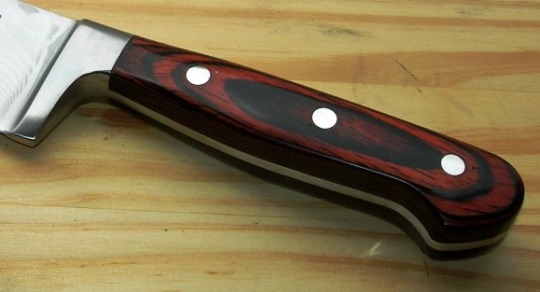
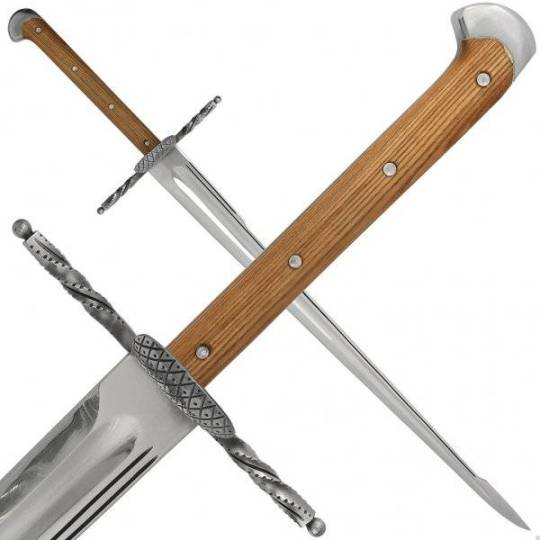
I don’t wanna like Kill The Joke but this brings up a really cool fact about swords in ~14th-16th century Germany! The only people who were allowed to own Real Swords were the royalty and nobility BUT! Everyone else was allowed to own knives. The definition of a knife, however, was based on not length but handle construction, and to some extent how it was sharpened. The handle had to be constructed Like So with 2 pieces of wood sandwiching the metal tang.
Only one edge was allowed to be sharpened, but oftentimes a small part (a couple inches) of the short edge (e.g. the edge that wasn’t sharp) would be sharpened, and weapon design often allowed for this
In this way, something that looked like This, a messer of just over a meter in length…
…would be legally considered a knife, and therefore allowable for non-nobility to possess. (you can also see the bit on the back of the tip that would be sharpened)
So @swordmutual, there’s a not definitive but certainly interesting historical perspective on your question
Some people threw white paint on it a few years back.
They want to be a victim so bad.
Fun Fact: That’s a statue of the fist which Joe Louis used to knock out Max Schmeling, Hitler’s favored heavyweight boxer in 1938. Schmeling won the 1st bout by knockout in round twelve, but Joe Louis came back in the follow-up match and laid him the fuck out in the 1st round.
Fun Fact: Schmeling was hated by the Nazis for losing to a black man and for having a Jewish manager, and he hated them right back, stating in 1975 that he was glad he’d lost the fight because the thought of the Nazis using him for propaganda purposes sickened him. He also personally saved the lives of two Jewish children and later became lifelong friends with Joe Louis.
So maybe don’t refer to him as “Hitler’s favored heavyweight boxer”…
Thank you for this additional info!
Reblogging this for the added facts and so people know that Schmeling wasn’t a Nazi or Nazi collaborator and was in fact a good man
Imagine hating Nazis so much that when you get beaten up your response is “Good, now they can’t use me as a role model.”
reasons to love frank sinatra: regularly punched out bigots even tho he was a shrimp who only weighed 119lbs
So, whenever I visit a new place, I have a habit of looking up roughly how many Jews live there by reviewing the number of synagogues in town. So the first time I was in Palm Springs, I looked up their schuls, and for one of them, I shit you not, it said it was founded with a donation from Frank Sinatra.
And I’m like “huh?” because I know Sinatra was an Italian Catholic, so I do some research, and it turns out that little Frank’s parents weren’t around very much when he was growing up, so he was often looked after by his Jewish neighbour Mrs Golden. Through his affection for her he developed a lifelong respect for the Jewish people, and even wore a mezuzah pendant that belonged to Mrs Golden as a sign of his respect and admiration for her.
Apparently he stood up for Jewish people for the rest of his life, and was vocally anti-Nazi and anti-racism to the point where he funded a synagogue without being Jewish. Wild.
During the Bubonic Plague, doctors wore these bird-like masks to avoid becoming sick. They would fill the beaks with spices and rose petals, so they wouldn’t have to smell the rotting bodies.
A theory during the Bubonic Plague was that the plague was caused by evil spirits. To scare the spirits away, the masks were intentionally designed to be creepy.
Mission fucking accomplished
Okay so I love this but it doesn’t cover the half of why the design is awesome and actually borders on making sense.
It wasn’t just that they didn’t want to smell the infected and dead, they thought it was crucial to protecting themselves. They had no way of knowing about what actually caused the plague, and so one of the other theories was that the smell of the infected all by itself was evil and could transmit the plague. So not only would they fill their masks with aromatic herbs and flowers, they would also burn fires in public areas, so that the smell of the smoke would “clear the air”. This all related to the miasma theory of contagion, which was one of the major theories out there until the 19th century. And it makes sense, in a way. Plague victims smelled awful, and there’s a general correlation between horrible septic smells and getting horribly sick if you’re around what causes them for too long.
You can see now that we’ve got two different theories as to what caused the plague that were worked into the design. That’s because the whole thing was an attempt by the doctors to cover as many bases as they could think of, and we’re still not done.
The glass eyepieces. They were either darkened or red, not something you generally want to have to contend with when examining patients. But the plague might be spread by eye contact via the evil eye, so best to ward that off too.
The illustration shows a doctor holding a stick. This was an examination tool, that helped the doctors keep some distance between themselves and the infected. They already had gloves on, but the extra level of separation was apparently deemed necessary. You could even take a pulse with it. Or keep people the fuck away from you, which was apparently a documented use.
Finally, the robe. It’s not just to look fancy, the cloth was waxed, as were all of the rest of their clothes. What’s one of the properties of wax? Water-based fluids aren’t absorbed by it. This was the closest you could get to a sterile, fully protecting garment back then. Because at least one person along the line was smart enough to think “Gee, I’d really rather not have the stuff coming out of those weeping sores anywhere on my person”.
So between all of these there’s a real sense that a lot of real thought was put into making sure the doctors were protected, even if they couldn’t exactly be sure from what. They worked with what information they had. And frankly, it’s a great design given what was available! You limit exposure to aspirated liquids, limit exposure to contaminated liquids already present, you limit contact with the infected. You also don’t give fleas any really good place to hop onto. That’s actually useful.
Beyond that, there were contracts the doctors would sign before they even got near a patient. They were to be under quarantine themselves, they wouldn’t treat patients without a custodian monitoring them and helping when something had to be physically contacted, and they would not treat non-plague patients for the duration. There was an actual system in place by the time the plague doctors really became a thing to make sure they didn’t infect anyone either.
These guys were the product of the scientific process at work, and the scientific process made a bitchin’ proto-hazmat suit. And containment protocols!
reblogging for the sweet history lesson
Reblogging because of the History lesson and because the masks, the masks are cool
Humans, you all know historical medicine ain’t my Thang™, but if any of you have any interest about plague times or just want to understand these bitchin’ get ups, this post is for you!
Bass Reeves was so dedicated to the law, he even arrested his own son Bennie for the murder of his wife. Bennie was sentenced to life in prison. With over 3000 arrests, 14 kills, went his entire 32 year career in law enforcement without being shot once.
He was assigned to bring in the notorious female outlaw Belle Starr. Once she got wind who was after her she turned herself into the federal court.
Reeves was one of a few Marshalls who would venture into Indian territory *oklahoma*. After the age of 67 he retired in 1907. He enjoyed his short lived retirement as a police officer in Muskogee Oklahoma, his assigned beat had 0 crime reported until he died at the age of 71 of Bright’s disease.
He was one of the true gun slingers of the west.
I would expect nothing less from a man with such a magnificent mustache
I love the story of Bass Reeves!
One of his famous tactics was, if he was captured or in danger by a criminal he was hunting down, he would ask them to read a letter from his wife before they killed him. He used their distraction to free himself and get the upper hand.
He was also a freed slave. George Reeves, his owner and reason for his surname, took Bass with him to fight in the Civil War. However, George became violently angry after Bass beat him at a card game, and Bass was forced to fight him (or kill, on some accounts) in self defense.
After running away and entering Native American territory, Bass learned how to speak the languages of the ‘Five Civilized Tribes’ (Cherokee, Chickasaw, Choctaw, Muskogee, Seminole). This part of his life is where he mastered marksmanship. He got married and had a family after the Emancipation Proclamation was declared, and then later became a Marshal, going on the adventures listed above (and many more… Another famous criminal that Bass captured was Bob Dozier.)
He was the very first black US Marshal. May we never forget him, as history would suffer to lose such an outstanding figure.
TIL Hans Christian Anderson ruined his friendship with Charles Dickens by inviting himself to his house and staying five weeks. He complained about the weather and service (no one would shave him), cut paper into weird shapes, and threw a fit on the lawn when his book got a bad review.




 Site Title