Did you guys know they make straight-up sheets of non-triangle-cut canned crescent roll dough now? I figured everyone knew but I told my mum and it BLEW HER MIND so I figured I should probably tell the internet, just in case.
I can’t hold it in any more WHY WHY IS THE DOUGH IN A CAN AMERICA THE LAND OF THE CANS WHY WHAT IS THIS CANS ARE FOR THINGS THAT YOU LEAVE AT THE BACK OF THE CUPBOARD FOR 6 YEARS AND THEN THROW OUT WHEN YOU MOVE OR PIE FILLING I’LL GIVE YOU THE PIE FILLING BUT DOUGH? MEAT? YES THEY PUT MEAT IN CANS TOO! HEATHENS!
Canning has a long tradition in America, going back to the colonization of the east coast and later of the west, where isolated farmhouses might go weeks without access to a dry goods store and had no access at all to fresh food in the winter (barring winter hunting, which could not get you fruits and veg). Canning was a common practice to make sure you had some kind of plant food to survive the winter months.
During the early 20th century, when industrialized food preservation and production was picking up (especially because long-term preservation was necessary for feeding troops in combat) canned food became commonplace, including in poor urban areas where refrigeration wasn’t available. Canned meat, because of mass production, might be more available and less costly than fresh meat, and would certainly last longer. (It’s now considered subpar to easily available fresh meat, but many people still have a can in their pantry or two, just in case, and canned tuna is a quite popular way to keep fresh cooked fish around for snacking without dealing with the smell). For households with two working parents or with only one parent, canned food was a convenient way to stock the larder for the week and still be able to provide your family with a decent meal. During the war, women who worked during the day and had a husband off in combat (or had a husband who had died in combat) still had to come home and feed their families, but without the eight hours a day they normally had to shop, prepare, and cook a meal (and do the laundry, and clean the home, and the million other unpaid labor activities that are always overlooked in homemakers and took a lot longer before industrialization).
After WWII, canned food was a major sub-industry because of all this, but with improved shipping speeds and preservation methods, it was also on the decline as an in-demand product; we started getting seasonal fruit and veg year-round which put the demand for canned food, sold next to said fresh food, on the decline. Marketing offices for canned food producers turned to aggressively marketing quick-cook recipes as a method of selling more product – if you can empty a can of condensed cream-of-mushroom soup into a dish instead of chopping and sauteeing fresh mushrooms and adding a cream-soup base, you’d save at least forty to fifty minutes of your time, you wouldn’t have to worry about buying mushrooms and cream (neither of which keep long, even in refrigeration) and you’d get a meal that was still pretty tasty. Particularly for boomers, who were raised on this method of cooking, it’s a totally normal flavor in prepared food. Keeping a can of cream-of-mushroom soup in the pantry was standard, and we used them in our house with regularity. The only reason I don’t keep one in my own pantry is that I have a dry soup mix that just requires adding mushrooms, and I have pre-chopped mushrooms available to me within two blocks of my apartment, plus the time, money, and able-bodiedness to procure them. You can get five or six cans of cream of mushroom soup for the cost of a pint of cream and a container of mushrooms, and you don’t have to walk from the veg aisle on one side of the store to the dairy aisle, usually on the opposite side.
Also in the 1950s, canned food was a common stockpile item against nuclear winter. Cold-war thinking bred two generations, the Boomers and the older GenXers, who wanted lots of food on hand in case we ended up nuked by Russia. Preparation for the Cold War honestly is the reason that people freak out about natural disasters and end up buying tons of fresh food, because those two generations were indoctrinated into the idea that any disaster means lack of available food.
And canned food in the pantry means if you get home at the end of the day and you’re exhausted, you don’t have to drive to a supermarket (remember that in the US there are very few corner groceries outside of major urban areas anymore, and many urban areas contain “food deserts” with no groceries at all). You can open a can, pour it into a pot, maybe dress it up a little, and have a decent hot meal. Making baked beans from dried beans, if you don’t have a pressure cooker, takes hours even if you do have a slow cooker; making baked beans from a can takes either 30 minutes (if you have plain canned beans; this also requires tomato sauce or ketchup or bbq sauce, plus brown sugar or molasses) or 10 minutes (if you have canned pork and beans, which might enjoy some added mustard and bbq sauce but don’t require them). And it’s a reasonably nutritious, filling meal.
Canned bread dough has to be refrigerated. It’s a sub-luxury food – it’s cheap and convenient but still needs to be bought relatively fresh and requires some, but not much, labor to prepare. It’s a nice dressing on the table if you have extra energy, or a fun meal to make with your family that doesn’t involve hours in the kitchen. Rolling little sausages up in Pilsbury dough takes maybe half an hour, but it doesn’t take the hour and a half to two hours it would if you had to make the dough from scratch. And in our culture where “quick cook” is aggressively marketed to sell convenience foods, there’s some competition to be had in terms of who can come up with the most imaginative use of this food – what’s the best thing to stuff into the bread, how do you cope best with the triangular shape, how delicious can you make this essentially convenience food.
So, in short (too late) canned food in this country arises from need and continues to cater to it, influenced by a combination of Madison Avenue, the military-industrial complex, and the shrinking quality of life for the middle and working class.
To open a crescent roll can you hold it in two hands and twist them in opposite directions. It makes a popping sound and it’s super satisfying. In 10 minutes you can have enough croissants for a few people to snack on or for one person to gorge on, and they literally taste like the concept of softness. And they’re fucking delicious with nutella. There is nothing bad or questionable about this precious perfect food product. (Not to mention that my single mother used these as a great activity for us both to do with limited time and money, tying in to what copperbadge said.)
canned food is also really important within the history of post-depression america. we basically go from the turn of the century to world war one (rations) to the jazz age (incredible inequality) to the depression (you wish things were as good as they were when we had rations) to world war two (rations two: electric boogaloo) so like, from about 1918-1950, you see consistent major upheavals in the way we procure our food and thus the way we cook. we kind of go from “anything you can get on the table” for about fifty years to “sudden and overwhelming abundance exacerbated by the presence of new technologies like flash freezing, freeze drying, advanced dehydrating, and new preservatives”
and you also see major upheavals in how labor works and what labor is by the time we get to having a stable, twentieth century food supply, so the result is
you have basically fifty years worth of americans that have lived through and been formed by serious food insecurity, major shifts in labor and class, major shifts in what an occupied and properly tended to domestic sphere consists of, and cold war disaster preparedness. all of this hits a culture that draws its ethical and spiritual root from the puritans (and i cannot overstate the importance of the puritans and protestant christianity in shaping the american diet and what the american meal is– much less american dieting culture) and new and exciting food technologies, and the shit hits the fan and
things get buck wild
there’s a really common statement made about julia child in that she taught america how to cook again, and there’s something to that that is very very true. it’s arguable that a love of food as an artful and beautiful tradition didn’t exist in america meaningfully until julia child, and that’s because she imported it from france. but yeah, arguably, america stopped cooking for fifty years and then by the time we had the resources to cook again, things had changed so much that many many americans didn’t have the time or the money to do it, and tastes had changed so much that we couldn’t do it as we had done before because no one liked it anymore.
i’ve reblogged this before but i’m gonna do it again because it’s so interesting, especially considering family history and recipes.
some great hold overs from the poor south 1950s:
dirty rice – put rice, a can of french onion soup, a can of beef consomme, half a stick of butter, and canned mushrooms in a baking dish and bake it. that’s it, you’re done, dig in. fucking delicious and my dad grew up on this. same concept as green bean casserole (or literally any casserole ever) like just dump canned soup and other canned ingredients in with butter and bake it until delicious. it’s got lots of sodium but this is Florida/Georgia it’s hot as fuck you’re gonna be sweating anyway you need it.
pea salad – drained canned sweet peas tossed in a dressing made of mayonnaise, ranch, vinegar, and garlic powder. peas and all the makings are cheap, it’s a cold “wet salad” from the same family of thought as potato salad or coleslaw, goes well with most meat or barbecue, and convinces your kids to eat green stuff on the cheap. Fancier version: buy the sweet peas with pearl onions and mushrooms mixed in. Cheap and also delicious the world can fight me on this one. good alternative to coleslaw if someone’s got something against shredded cabbage and carrot in a perfect delicious tangy sweet dressing handed down from the gods (i’ll throw down about some coleslaw too oops)
and when you’re feeling really wild and like splurging you get the wonder of the tater sandwich– whole wheat bread with mayo or butter, and your choice of fried potatoes on it. My dad’s mom used to slice potatoes into rounds and fry them in a skillet on the stove top; my mum is a Scot who also had the Scot version of a tater sandwich (makes sense, lots of poor scots ended up in the SE where my dad’s family is from, lots of culinary crossover) and so makes homemade thick cut chips (call them fries at your peril). I’m not down with the tater sandwich, I’m a potato purist who just wants to eat my weight in potatoes and nought else, but I respect my elders and there will be no bad mouthing a family tradition in this house.
all the recipes from that side of the family, be they canned soup based or otherwise, are cheap, filling, and delicious. It’s not always the healthiest food by any stretch, but you’re not hungry, it tastes good, and it’s actually got a fare amount of veggies– probably because my dad’s family grew their own vegetables in a huge family garden beside their house. It was good peaty soil right next to a swamp and my Pa could have grown a new car from a rubber tire if he so chose, he was such a good farmer. My dad and his three sisters used to end up working in the garden every day after school. It was the only way they could have gotten fresh produce otherwise, they had so little money. Considering then that a lot of families didn’t have that and probably saw even less fresh produce in their kitchen than my dad’s family did…
legit, i have so much respect for people like my granny and pa who turned out such good tasting stuff from nothing but instant rice and condensed soup.
When I put them in the queue I thought everyone was going to get annoyed because they’ve seen them a million times, I feel terrible that so many of you guys haven’t!
There is this controversy in book industries about e-books; specifically Amazon who has made it easy for someone to self publish whereas before it would cost someone thousands of dollars and so if you did you were a loser because you obviously couldn’t get an agent or even get an indie publisher to back you. All of a sudden a million books are being self published by losers who are ruining literature because anyone can just print anything and nothing matters anymore. It’s the same thing they said when they invented the printing press and then again when trade paperbacks became a thing.
A whole bunch of people, mostly fanfic writers just repurpose in their work, start publishing these short erotic novels that they haven’t even edited and it was all getting weirder and weirder.
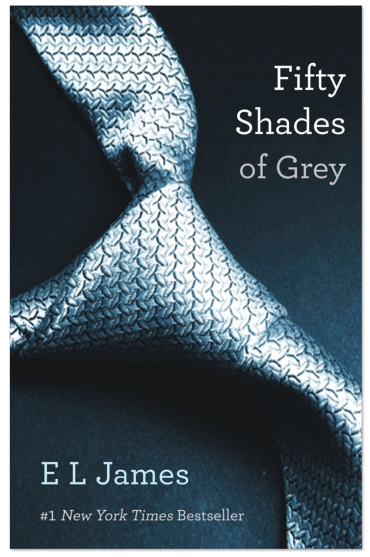
BDSM became mainstream because of EL James publishing her Twilight fanfiction ‘50 shades of gray’ and then suddenly there were a bunch of books that made people uncomfortable about time traveling to fuck dinosaurs. One erotic novel written by Christie Sims and Alara Branwen kind of became the poster child for the demise intellectualism.
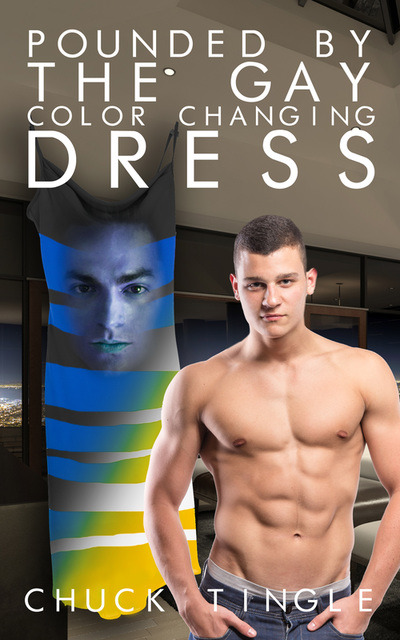
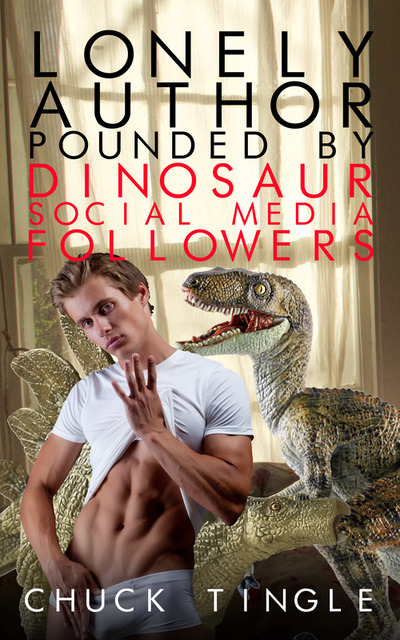
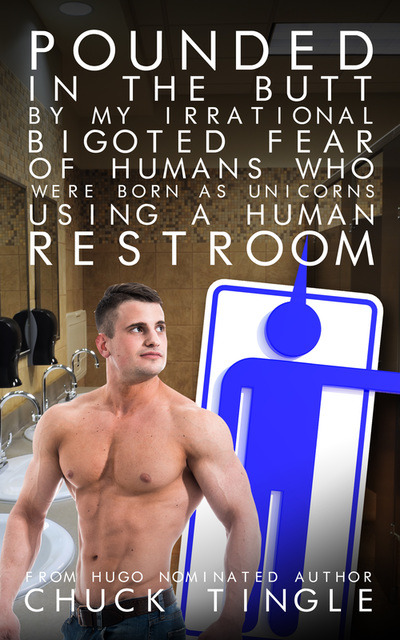
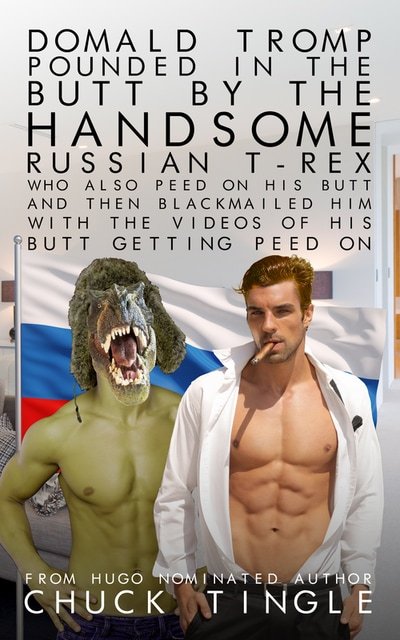
A few years later someone calling themselves Chuck Tingle started to publish tiny erotica novels about people having sex with unicorns and Bigfoot that were intentionally weird with long and had highly specific titles. The covers went viral, most people thinking they were memes but then discovered they were real books that were actual short stories written by somebody who knew how to write and was obviously mocking the controversy.
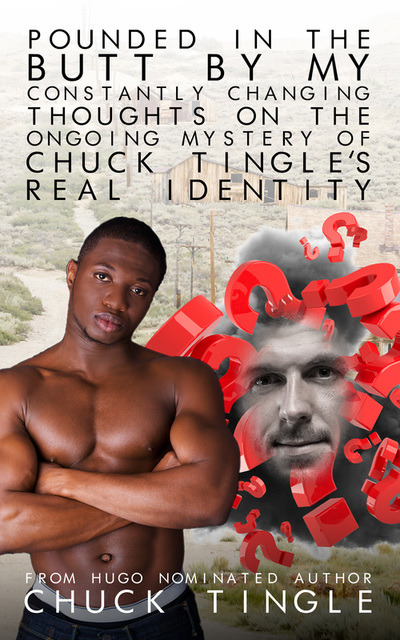
Everyone was complaining and trying to find out who he was and journalists were trying to contact “him” but he refused to be interviewed. The popular rumor started going around that it was actually a father and son that wrote the books together and someone who everyone is probably sure was actually Chuck Tingle was anonymously interviewed and was like, “lol yeah and we usually write them start to finish in one night” which made people madder and was true because he really blew up when a meme about this dress went viral in a day and by the end of the day
Chuck
Tingle had a new erotic novel about fucking the dress.
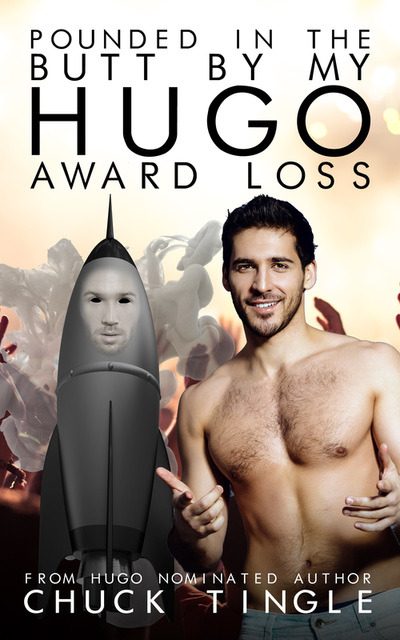
Adding to the controversy is the fact that if you publish through Amazon people can read your books for free through their “digital library” but when people check out books it’s technically counted as a sale. Out of nowhere some dude named Chuck Tingle was at the top of the bestsellers list with these offensive books and sort of accidentally got nominated for a really prestigious award and everyone lost their shit.
The powers that be were changing the rules so he couldn’t win, which is what also happened to Neil Gaiman when his comic book Sandman got nominated and everyone was outraged that a comic book could be considered literature. Neil Gaiman actually won the award and then they put in a rule that no more comic books could be nominated, but they got lucky with Chuck Tingle and he didn’t win. Except then he was nominated for a second time.
Obviously Chuck Tingle didn’t win again,
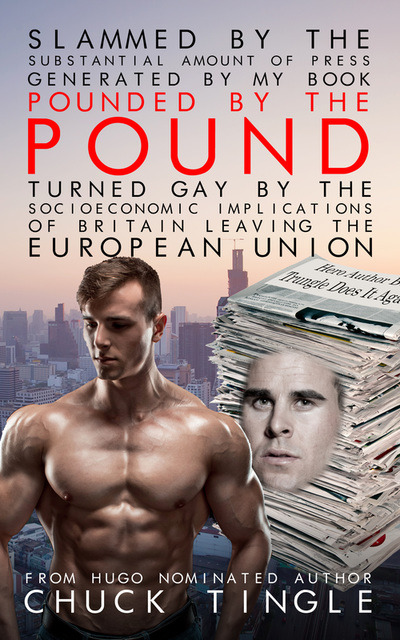
but then he kind of doubled down and published books about getting fucked by his nomination and then fucked by the concept of getting fucked over by the industry. Then his book started getting really mostly sociopolitical and shoved his award nomination down everyone’s throats..
They were still just short weird erotica, but instead of being tongue-in-cheek funny they became condescendingly critical.
He has a website with an about me page but he’s become a folklore hero and everyone is 99% sure it’s fake.
As he stands now, the industries are still really upset but the indie scenes are considering them high art.
I am among the latter.
Don’t forget, the whole reason people nominated Chuck Tingle for the Hugo awards in the first place is because a lot of white male authors were really mad that women and racial minorities were winning awards. They nominated him, but of course, he wasn’t going to ruin the mystery by revealing himself, so instead he had someone go to the Hugos in his place… Zoe Quinn, who Gamergate centered around, and who was therefore the poster child of everything this group *hated*.
Chuck Tingle is a goddamn master.
Thank you for addingthat. I was about to be “but it wasn’t an accident he was nominated for a Hugo”
Carpathia received Titanic’s distress signal at 12:20am, April 15th, 1912. She was 58 miles away, a distance that absolutely could not be covered in less than four hours.
(Californian’s exact position at the time is…controversial. She was close enough to have helped. By all accounts she was close enough to see Titanic’s distress rockets. It’s uncertain to this day why her crew did not respond, or how many might not have been lost if she had been there. This is not the place for what-ifs. This is about what was done.)
Carpathia’s Captain Rostron had, yes, rolled out of bed instantly when woken by his radio operator, ordered his ship to Titanic’s aid and confirmed the signal before he was fully dressed. The man had never in his life responded to an emergency call. His goal tonight was to make sure nobody who heard that fact would ever believe it.
All of Carpathia’s lifeboats were swung out ready for deployment. Oil was set up to be poured off the side of the ship in case the sea turned choppy; oil would coat and calm the water near Carpathia if that happened, making it safer for lifeboats to draw up alongside her. He ordered lights to be rigged along the side of the ship so survivors could see it better, and had nets and ladders rigged along her sides ready to be dropped when they arrived, in order to let as many survivors as possible climb aboard at once.
I don’t know if his making provisions for there still being survivors in the water was optimism or not. I think he knew they were never going to get there in time for that. I think he did it anyway because, god, you have to hope.
Carpathia had three dining rooms, which were immediately converted into triage and first aid stations. Each had a doctor assigned to it. Hot soup, coffee, and tea were prepared in bulk in each dining room, and blankets and warm clothes were collected to be ready to hand out. By this time, many of the passengers were awake–prepping a ship for disaster relief isn’t quiet–and all of them stepped up to help, many donating their own clothes and blankets.
And then he did something I tend to refer to as diverting all power from life support.
Here’s the thing about steamships: They run on steam. Shocking, I know; but that steam powers everything on the ship, and right now, Carpathia needed power. So Rostron turned off hot water and central heating, which bled valuable steam power, to everywhere but the dining rooms–which, of course, were being used to make hot drinks and receive survivors. He woke up all the engineers, all the stokers and firemen, diverted all that steam back into the engines, and asked his ship to go as fast as she possibly could. And when she’d done that, he asked her to go faster.
I need you to understand that you simply can’t push a ship very far past its top speed. Pushing that much sheer tonnage through the water becomes harder with each extra knot past the speed it was designed for. Pushing a ship past its rated speed is not only reckless–it’s difficult to maneuver–but it puts an incredible amount of strain on the engines. Ships are not designed to exceed their top speed by even one knot. They can’t do it. It can’t be done.
Carpathia’s absolute do-or-die, the-engines-can’t-take-this-forever top speed was fourteen knots. Dodging icebergs, in the dark and the cold, surrounded by mist, she sustained a speed of almost seventeen and a half.
No one would have asked this of them. It wasn’t expected. They were almost sixty miles away, with icebergs in their path. They had a respondibility to respond; they did not have a responsibility to do the impossible and do it well. No one would have faulted them for taking more time to confirm the severity of the issue. No one would have blamed them for a slow and cautious approach. No one but themselves.
They damn near broke the laws of physics, galloping north headlong into the dark in the desperate hope that if they could shave an hour, half an hour, five minutes off their arrival time, maybe for one more person those five minutes would make the difference. I say: three people had died by the time they were lifted from the lifeboats. For all we know, in another hour it might have been more. I say they made all the difference in the world.
This ship and her crew received a message from a location they could not hope to reach in under four hours. Just barely over three hours later, they arrived at Titanic’s last known coordinates. Half an hour after that, at 4am, they would finally find the first of the lifeboats. it would take until 8:30 in the morning for the last survivor to be brought onboard. Passengers from Carpathia universally gave up their berths, staterooms, and clothing to the survivors, assisting the crew at every turn and sitting with the sobbing rescuees to offer whatever comfort they could.
In total, 705 people of Titanic’s original 2208 were brought onto Carpathia alive. No other ship would find survivors.
At 12:20am April 15th, 1912, there was a miracle on the North Atlantic. And it happened because a group of humans, some of them strangers, many of them only passengers on a small and unimpressive steam liner, looked at each other and decided: I cannot live with myself if I do anything less.
I think the least we can do is remember them for it.
2016: You were supposed to differentiate what you want from what you think the world wants from you. This was a year of self-discovery, one that had you challenging and questioning a lot of things that you’d previously been accepting as fact. You did a lot of soul-searching this year, and came out on the other end with some pivotal realizations.
2017: You were supposed to dive off the high board. When you knew what needed to change you went for it – and probably head first. This was the year in which you experienced radical change and saw a world that was beyond what you’d ever conceived of before. All of this new understanding brought a change in perspective, and a welcome one at that.
2018: This is the year you decide what you want to do from here on out. This is the year that you get clear on some of the big, lingering question marks that still exist in your life. You’ll regain your clarity and focus in work and in love, and you’ll get ready to start deepening those roots come 2019.
TAURUS
2016: You were supposed to reinvent something. Whether that was a home remodel, a career shift, or even just a reconsideration of who your innermost friend group is, what really changed this year was your self-image. There were parts of yourself you’ve needed to accept for a long time, and other parts of your potential that had been latent until now. This was the year to do what had not been done before.
2017: You were supposed to learn boundaries. Yes, you’re a social creature (even if you’re inherently introverted, Tauruses thrive in their “tribe”). Despite this, 2017 was a year to learn what it means to say “no,” what it means to speak up when you need to speak up, what it means to not fear being disliked in favor of exhausting yourself to the point of total depletion.
2018: This is the year the tides turn for the shore. After so many months of uncertainty, newness and soul-searching, this is the year that you start to find some reprieve. Venus is center stage all year long, and your personal relationships and business ventures receive sparkling luck because of it.
GEMINI
2016: You were supposed to embrace changes at home. This year ruled everything with your closest family members, and this was a time for you to confront new challenges with vigor and to find within them grace. You’d spent the last few years very much focused on yourself and your work, but something drew your attention to what really matters: giving your time and energy to those closest to you.
2017: You were supposed to see who your real friends are. You’d spent so much of the last few years trying to cater to people who sometimes didn’t seem like they really cared all that much in return, and 2017 brought complete clarity as to who you should really be spending your time with. This was a year to make amends, reinvent your social calendar, and redistribute your time and energy to people and things that brought you joy in return.
2018: You are supposed to embrace that project you’ve been dreaming of forever. With everything starting to settle into a new kind of normalcy on the homefront, this year will be all about stepping past your comfort zone and building something for yourself. There’s a reason you’d been feeling so much stagnancy and discomfort at times – something was telling you that you’re meant to do greater things than you can currently conceive of. This is the year to take the first step.
CANCER
2016: You were supposed to let this year surprise you. This was a time of unexpected advancement for you, and some of the choices you made then would leave lasting impressions on your life for many years to come. You gained clarity and a degree of maturity you didn’t even realize you were missing. This was the year that you started to get clear on what – or who – you really want in your life.
2017: This was the year you were supposed to run, not walk, toward your goals. This was the year that you started living out your ambitions every single day. Gone are the days of pipe dreams just existing in your mind. Whether it was committing to newfound responsibility, routine, or even just making more time for what you claim to value, this was the year you challenged yourself.
2018: You are supposed to let love in. It doesn’t matter if you’re single or happily betrothed, this is the year that love takes center stage for you. Whether it is friendships, your closest romantic relationship or even just self-love, this is the year that you re-prioritize what you thought mattered and make sure that your life is focused on what really matters: the people you love, the things you love, and the work that you love, as much as you’re able to love it.
LEO
2016: You were supposed to let go of the plan. At this point in your life, you had to accept that though things didn’t go as you once thought they would, that doesn’t mean they aren’t going well. Though it comforts you to adhere to your idea of “what’s next,” sometimes, the best thing you can do is see where life takes you. Usually, the things you lose are for your best interest anyway.
2017: You were supposed to find yourself again. The low blows of 2016 took a toll on your self-confidence, which is a rare thing for you to experience. However, it set you up to find a whole new degree of self-confidence and assuredness within yourself. If you could survive the past year, you can survive anything.
2018: You’re supposed to go where you’ve never been before. They say that the true definition of idiocy is doing the same thing over and over and expecting different results. This year, that will be put to the test for you. You’re meant to expand your borders, date new people, try new things… you may just find that there’s a whole lot of joy waiting for you in life, if only you’d open up and give it a chance.
VIRGO
2016: You were supposed to cut loose ends. This was the year that you had to come face to face with what wasn’t working in your life – lest it be forcefully removed from you first.
2017: You were supposed to pursue a new dream. This was the year that you embarked on a new, long-awaited adventure, whether it was a new relationship, the next level of your career, or perhaps even travel. This was the year in which you were supposed to take risks, and see firsthand what works and what doesn’t for your life.
2018: You are supposed to make some firm decisions. After the past two years of an intense tug of war between what you think should be working and what you know isn’t, this is the year to ride or die. You will either start to soar and thrive like you never have before, or come to terms with having tried something new, even if it wasn’t supposed to be forever.
LIBRA
2016: You were supposed to learn how to plant seeds. The past few years have been nothing short of radical for you, and it all began with your emerald Jupiter year in 2016 lighting the way for you to start making connections – perhaps with partners, employers or even with your inner self – that would come to fruition over the next few years.
2017: You were supposed to realize how you were holding yourself back. This year was all about letting those seeds start to sprout, and identifying the ways in which you were stomping on your garden before you gave it a chance to grow.
2018: You are supposed to learn how to let your garden feed you. This year is about finishing up what began in 2016, and allowing yourself to thrive in it. It is about making serious relationship commitments, becoming more financially stable than ever, and adjusting to your highest vision of yourself – because deep down, that’s who you’ve been all along.
SCORPIO
2016: You were supposed to learn how to see for yourself. Despite being particularly self-assured and confident – even standoffish at times – you’re almost overwhelmingly swayed by what you think other people think. This was the year to start believing in your power more than your doubt; to start honoring what you feel, not what others believe.
2017: You were supposed to embrace the feelings you’d been shoving away for so long. This year was all about confronting the emotions that you had been trying to avoid. Of course, it is all with purpose: next year is going to be about your renewal, and so to know what you want, you usually must first identify what you don’t.
2018: You’re supposed to start new. With Jupiter touring your sun sign for most of the year, it is your time to build the life of your dreams. The relationships, jobs, challenges and choices you make now will leave you with (positive) repercussions for many, many years to come.
SAGITTARIUS
2016: You were supposed to learn what it means to reconcile. This was the year that you had to look face first at what you think you’ve failed at, the relationships that had deteriorated over the years, and the ways in which you need to improve your wellbeing. This year likely brought you to many distant lands and into the arms of people you’d never expected. This was a year of mind, body and spirit exploration. You were supposed to come out on the other end with a greater sense of clarity.
2017: You were supposed to learn how to reconnect. Whether it was a sick parent who you needed to stay at the bedside of, or a cousin who you’d regrettably lost contact with over the years, or even a friend who you’d always think about but never make plans with, this was a year that you opened your heart back up, and let the right people in… however slowly you had to do it.
2018: You are supposed to make significant change in your life this year. Whether this means finally moving, changing careers like you’ve known you had to for so long, or just re-adjusting your daily routine to be more sustainable, this is the year in which any unstable bridges will collapse. This is for the best – you’d been hanging on by a thread for far too long. Besides, greener pastures await.
CAPRICORN
2016: You were supposed to learn how to have vision. Despite being strong-minded, Caps are known for being malleable, if not gullible. They easily adopt other people’s ideals as their own, and this was the year to break out of that. It was time for you to learn how to think and feel autonomously, and the chances that succeeded those revelations seemed nothing short of miraculous.
2017: You were supposed to get clarity on what’s not working. This was the year that didn’t hold back: you saw what doors were closed, you saw people’s true colors and intentions, you saw which business ventures were becoming fruitful and which weren’t. You couldn’t fool yourself if you tried to this year, the only question was how long it would take for you to finally choose to pivot.
2018: You are supposed to start a journey into the unknown. This is a year in which you will do things you’ve never done before, perhaps live in or visit places you’ve never been, try work you’ve never done. This is the year that you will surprise yourself with your capability, and you will see all your past regrets dissolve now that you are truly living for your own best interest, not your preoccupation with someone else.
AQUARIUS
2016: You were supposed to learn patience. Some years are revolutionary, some are stationary, some just… are. This year was the latter for you, as things seemed to move slowly, if at all. Little did you know then, the gears were turning, it was all just happening beneath the hood (so to say).
2017: You were supposed to learn how to trust. This is a year that bridged the status of your life between 2016 and 2018, and it was built entirely on trusting people. Letting others into your sacred vision for business, love or life is not easy, but it is crucial. This year, you started to open up to potential you hadn’t recognized before, whether that was dating someone outside of your norm, or letting other people take on more responsibility at your job. Either way, it worked out for the best.
2018: You are supposed to learn how to coexist, and co-work, better than ever before. You’ve learned over the past few years that teamwork makes the dream work (ha, but seriously, it does). Therefore, it’s in your best interest to be the best partner and in some cases, boss, that you can be. This means honing in on your empathy, your compassion, and at times, your selflessness, all while holding true to a greater vision. It’s a challenge, but the rewards will be invaluable.
PISCES
2016: You were supposed to look into your past, and feel into your depths. This was a year in which some of your darkest traumas peeked their way out of the closet and said hi again. Of course, this was not so you’d needlessly suffer, but so that you’d see them for what they are – harmless ghosts in the closet – and resolve that you can move on.
2017: You were supposed to find passion again. Over the past few years, if you’ve been less than thrilled with life it’s because you’ve felt your passions were suppressed by the weight of responsibility and loss. This is the year you rediscovered what you really love, or noticed that maybe you made a wrong choice with a move, a job, or a personal life decision. Either way, it’s not too late to turn around, or in some cases, keep running toward the horizon.
2018: You are supposed to change your life – for good. With all of the evidence you’ve gathered over the past few years, now is the time to take action. You know where you want to go, the challenge is only whether or not you will be fearless enough to let yourself do it.
Be proud of smuggling salt, people! We certainly are!
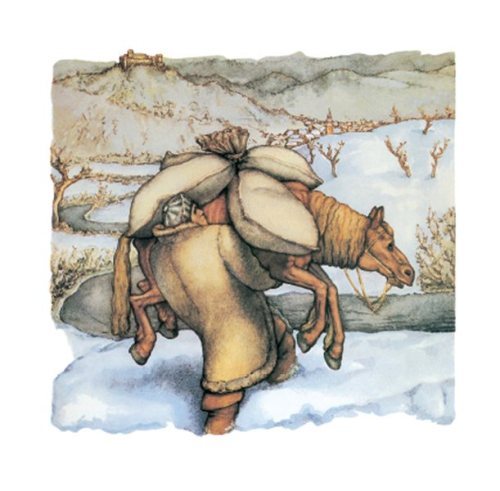
Is he carrying a horse
a whole horse
isn’t that how smuggling work?
True.
Just carry the whole horse plus load.
They never expect HORSE to RIDE MAN
The story behind this was that the guy was a prolific salt smuggler but he was also massive so one time he got caught in a snowstorm and ended up carrying his mule and his cargo of salt through the blizzard
Beautiful.
Actually! This is from a Slovenian legend, and is even more badass!
Gather around, let me tell you a story, people!!!
In a small village in Slovenia lived a huge strong man named Martin Krpan. Martin had a small mare, and together they smuggled english salt from the port by the sea to central Slovenia. Smuggling salt was strictly forbidden, but Martin did it anyway. As one does.
On a harsh winter day, when the roads were snowed over until only the smallest path was visible, Martin was smuggling when a fancy carriage came driving towards him. There being not enough room, strong Martin picks his mare up, salt and all, and moves her out of the way.
The carriage stops and out peeks the Emperor who was traveling to the coastal Trieste. Martin, being a simple farmer, had no idea who the man was. The emperor was very impressed by Martin’s strength, so he asked for his name and his home. Then he asks what Martin’s mare is carrying.
And Marin lies he carries whetstones, calm as you please.
Emperor asks why are whetstones in sacks like that.
Marin thinks fast and improvises that he worries the stones might crack in the cold.
(Slovenian winters really are bloody cold btw)
Emperor ah-s and hm-s and drives on.
A year after that, to Vienna comes a great hulking man from Turkey, named Brute.
(Slovenian: Brdavs)(Also, very descriptive name, that)
Brute brought with him great terror, as he challenged all the warriors and heros in the land to single combat. And killed them all. Seriously, they died like flies.
So now the Emperor, afraid he’ll lose all great men to this monstrous warrior, remembers Martin, the man who could lift a horse like it was made of feathers. So he sends a coach to get him.
They find Martin (How I’m not sure, him living in a tiny insignificant village) and supposedly come just in time to see the guy brawling with fifteen men and wining. So now they are absolutely sure they have the right man.
So off they go to Vienna, where the whole city is covered in black mourning cloth. Just that day, Brute killed Emperor’s son, and everyone is very depressed.
The Emperor is all relieved when he sees Martin, gets him all the food and drink he wants, and pesters him with questions about battle tactics all the while.
(I always imagine the Emperor as a small fussy man with a huge wig btw)
Martin just kind of grunts in answer, telling him not to worry. In as few words as possible. So after being fed and watered, the go looking for a weapon.
In the armoury, Martin tries handling each weapon and all just crumble in his hands. Just, break apart. Martin grunts again, the Emperor is wringing his hands.
In the end Martin maked his own weapon, something that looks a bit like an axe and a bit like a cleaver. Then he takes that blade and goes to the courtyard. And takes down the most beautiful young linden tree, Empress’s favourite. And he makes a club out of it. She is very furious. Spitting mad.
Then they go looking for a horse. He pulls them out of the stables one by one by their tails, with ease. Which offends him, like, very. And he refuses to fight until his trusty mare is sent for. Which it is. (I pity the poor guy who had to get her to Vienna. I wonder is he survived the trip)
Then it is the time for battle. Dramatically the opponents meet in the middle of the field, and the Brute sees this huge man on a tiny horse, a sight so comical he begins to laugh. Very loudly.
Brute humors Martin anyway, and they shake hands before the battle. And Martin squeezes so hard blood squirts out from Brute’s fingernails. (Ew.)
Now Brute is wary. Because, blood? But he thinks, whatever, he’s a peasant, he doesn’t know how to fight. So, tadaah, they fight.
And Brute swings his mighty sword, which is intercepted by the linden club. The soft wood gives like butter and the blade is stuck. Then Martin swings his axe and chops Brute’s head clean off. Chop chop.
Martin returns back to court with Brute’s head, and everyone is very relieved. So relieved in fact, the Emperor offers him all sorts of things, food and wine and even his own daughter in marriage.
(The Empress is murderous. Again. To marry her precious daughter to a peasant hulk of a man who doesn’t even wear nice clothes or high heals. Outrageous!)
But Martin refuses all, squints at the Emperor for a bit, then smoothly confesses to his salt smuggling business. And totally gets him to sign a royal permit on salt transportation.
So Martin the strongest Slovenian returned home, now legally transporting salt for all his days.
Local Man Just Wants To Be Salt Merchant, Accidentally Saves Country
I’ve decided to tell you guys a story about piracy.
I didn’t think I had much to add to the piracy commentary I made yesterday, but after seeing some of the replies to it, I decided it’s time for this story.
Here are a few things we should get clear before I go on:
1) This is a U.S. centered discussion. Not because I value my non U.S. readers any less, but because I am published with a U.S. publisher first, who then sells my rights elsewhere. This means that the fate of my books, good or bad, is largely decided on U.S. turf, through U.S. sales to readers and libraries.
2) This is not a conversation about whether or not artists deserve to get money for art, or whether or not you think I in particular, as a flawed human, deserve money. It is only about how piracy affects a book’s fate at the publishing house.
3) It is also not a conversation about book prices, or publishing costs, or what is a fair price for art, though it is worthwhile to remember that every copy of a blockbuster sold means that the publishing house can publish new and niche voices. Publishing can’t afford to publish the new and midlist voices without the James Pattersons selling well.
It is only about two statements that I saw go by:
1) piracy doesn’t hurt publishing.
2) someone who pirates the book was never going to buy it anyway, so it’s not a lost sale.
Now, with those statements in mind, here’s the story.
It’s the story of a novel called The Raven King, the fourth installment in a planned four book series. All three of its predecessors hit the bestseller list. Book three, however, faltered in strange ways. The print copies sold just as well as before, landing it on the list, but the e-copies dropped precipitously.
Now, series are a strange and dangerous thing in publishing. They’re usually games of diminishing returns, for logical reasons: folks buy the first book, like it, maybe buy the second, lose interest. The number of folks who try the first will always be more than the number of folks who make it to the third or fourth. Sometimes this change in numbers is so extreme that publishers cancel the rest of the series, which you may have experienced as a reader — beginning a series only to have the release date of the next book get pushed off and pushed off again before it merely dies quietly in a corner somewhere by the flies.
So I expected to see a sales drop in book three, Blue Lily, Lily Blue, but as my readers are historically evenly split across the formats, I expected it to see the cut balanced across both formats. This was absolutely not true. Where were all the e-readers going? Articles online had headlines like PEOPLE NO LONGER ENJOY READING EBOOKS IT SEEMS.
Really?
There was another new phenomenon with Blue Lily, Lily Blue, too — one that started before it was published. Like many novels, it was available to early reviewers and booksellers in advanced form (ARCs: advanced reader copies). Traditionally these have been cheaply printed paperback versions of the book. Recently, e-ARCs have become common, available on locked sites from publishers.
BLLB’s e-arc escaped the site, made it to the internet, and began circulating busily among fans long before the book had even hit shelves. Piracy is a thing authors have been told to live with, it’s not hurting you, it’s like the mites in your pillow, and so I didn’t think too hard about it until I got that royalty statement with BLLB’s e-sales cut in half.
Strange, I thought. Particularly as it seemed on the internet and at my booming real-life book tours that interest in the Raven Cycle in general was growing, not shrinking. Meanwhile, floating about in the forums and on Tumblr as a creator, it was not difficult to see fans sharing the pdfs of the books back and forth. For awhile, I paid for a service that went through piracy sites and took down illegal pdfs, but it was pointless. There were too many. And as long as even one was left up, that was all that was needed for sharing.
I asked my publisher to make sure there were no e-ARCs available of book four, the Raven King, explaining that I felt piracy was a real issue with this series in a way it hadn’t been for any of my others. They replied with the old adage that piracy didn’t really do anything, but yes, they’d make sure there was no e-ARCs if that made me happy.
Then they told me that they were cutting the print run of The Raven King to less than half of the print run for Blue Lily, Lily Blue. No hard feelings, understand, they told me, it’s just that the sales for Blue Lily didn’t justify printing any more copies. The series was in decline, they were so proud of me, it had 19 starred reviews from pro journals and was the most starred YA series ever written, but that just didn’t equal sales. They still loved me.
This, my friends, is a real world consequence.
This is also where people usually step in and say, but that’s not piracy’s fault. You just said series naturally declined, and you just were a victim of bad marketing or bad covers or readers just actually don’t like you that much.
Hold that thought.
I was intent on proving that piracy had affected the Raven Cycle, and so I began to work with one of my brothers on a plan. It was impossible to take down every illegal pdf; I’d already seen that. So we were going to do the opposite. We created a pdf of the Raven King. It was the same length as the real book, but it was just the first four chapters over and over again. At the end, my brother wrote a small note about the ways piracy hurt your favorite books. I knew we wouldn’t be able to hold the fort for long — real versions would slowly get passed around by hand through forum messaging — but I told my brother: I want to hold the fort for one week. Enough to prove that a point. Enough to show everyone that this is no longer 2004. This is the smart phone generation, and a pirated book sometimes is a lost sale.
Then, on midnight of my book release, my brother put it up everywhere on every pirate site. He uploaded dozens and dozens and dozens of these pdfs of The Raven King. You couldn’t throw a rock without hitting one of his pdfs. We sailed those epub seas with our own flag shredding the sky.
The effects were instant. The forums and sites exploded with bewildered activity. Fans asked if anyone had managed to find a link to a legit pdf. Dozens of posts appeared saying that since they hadn’t been able to find a pdf, they’d been forced to hit up Amazon and buy the book.
And we sold out of the first printing in two days.
Two days.
I was on tour for it, and the bookstores I went to didn’t have enough copies to sell to people coming, because online orders had emptied the warehouse. My publisher scrambled to print more, and then print more again. Print sales and e-sales became once more evenly matched.
Then the pdfs hit the forums and e-sales sagged and it was business as usual, but it didn’t matter: I’d proven the point. Piracy has consequences.
That’s the end of the story, but there’s an epilogue. I’m now writing three more books set in that world, books that I’m absolutely delighted to be able to write. They’re an absolute blast. My publisher bought this trilogy because the numbers on the previous series supported them buying more books in that world. But the numbers almost didn’t. Because even as I knew I had more readers than ever, on paper, the Raven Cycle was petering out.
The Ronan trilogy nearly didn’t exist because of piracy. And already I can see in the tags how Tumblr users are talking about how they intend to pirate book one of the new trilogy for any number of reasons, because I am terrible or because they would ‘rather die than pay for a book’. As an author, I can’t stop that. But pirating book one means that publishing cancels book two. This ain’t 2004 anymore. A pirated copy isn’t ‘good advertising’ or ‘great word of mouth’ or ‘not really a lost sale.’
That’s my long piracy story.
This is worth reading for about a hundred reasons. Including the brilliant publishing-day exploit.
So there’s a known thing in the study of human psychology/sociology/what-have-you where men are known to, on average, rely entirely on their female romantic partner for emotional support. Bonding with other men is done at a more superficial level involving fun group activities and conversations about general subjects but rarely involves actually leaning on other men or being really honest about emotional problems. Men use alcohol to be able to lower their inhibitions enough to expose themselves emotionally to other men, but if you can’t get emotional support unless you’re drunk, you have a problem.
So men need to have a woman in their lives to have anyone they can share their emotional needs and vulnerabilities with. However, since women are not socialized to fear sharing these things, women’s friendships with other women are heavily based on emotional support. If you can’t lean on her when you’re weak, she’s not your friend. To women, what friendship is is someone who listens to all your problems and keeps you company.
So this disconnect men are suffering from is that they think that only a person who is having sex with you will share their emotions and expect support. That’s what a romantic partner does. But women think that’s what a friend does. So women do it for their romantic partners and their friends and expect a male friend to do it for them the same as a female friend would. This fools the male friend into thinking there must be something romantic there when there is not.
This here is an example of patriarchy hurting everyone. Women have a much healthier approach to emotional support – they don’t die when widowed at nearly the rate that widowers die and they don’t suffer emotionally from divorce nearly as much even though they suffer much more financially, and this is because women don’t put all their emotional needs on one person. Women have a support network of other women. But men are trained to never share their emotions except with their wife or girlfriend, because that isn’t manly. So when she dies or leaves them, they have no one to turn to to help with the grief, causing higher rates of death, depression, alcoholism and general awfulness upon losing a romantic partner.
So men suffer terribly from being trained in this way. But women suffer in that they can’t reach out to male friends for basic friendship. I am not sure any man can comprehend how heartbreaking it is to realize that a guy you thought was your friend was really just trying to get into your pants. Friendship is real. It’s emotional, it’s important to us. We lean on our friends. Knowing that your friend was secretly seething with resentment when you were opening up to him and sharing your problems because he felt like he shouldn’t have to do that kind of emotional work for anyone not having sex with him, and he felt used by you for that reason, is horrible. And the fact that men can’t share emotional needs with other men means that lots of men who can’t get a girlfriend end up turning into horrible misogynistic people who think the world owes them the love of a woman, like it’s a commodity… because no one will die without sex. Masturbation exists. But people will die or suffer deep emotional trauma from having no one they can lean on emotionally. And men who are suffering deep emotional trauma, and have been trained to channel their personal trauma into rage because they can’t share it, become mass shooters, or rapists, or simply horrible misogynists.
The only way to fix this is to teach boys it’s okay to love your friends. It’s okay to share your needs and your problems with your friends. It’s okay to lean on your friends, to hug your friends, to be weak with your friends. Only if this is okay for boys to do with their male friends can this problem be resolved… so men, this one’s on you. Women can’t fix this for you; you don’t listen to us about matters of what it means to be a man. Fix your own shit and teach your brothers and sons and friends that this is okay, or everyone suffers.



































 Site Title